
when first starting to sign with children, it can be a bit overwhelming. this is true with signing with babies, and can be even more so with older children, and with children with special needs.
my advice...start small.
pick what is really important. what do you find yourself saying every single day with your child?
once you figure that out, learn the sign, and sign it. over and over and over!
take a couple signs a week, and practice them. you'll see, it doesn't take long before what seemed like an overwhelming job, once broken down into smaller jobs, now doesn't seem so overwhelming.
and don't forget to have fun!


CLASSES AND PROGRAMS
PRODUCTS
DVDs
CDs
Books
Flash cards
Board books
Toys
Others
Share products
FUN
Pictures
Videos
Share your pic
and video

Signing With Babies And Children
Monday, March 15, 2010


Wednesday, March 10, 2010
A Few Mom Tips
Mommy Tips are what I’m going to list…
Communication/Bonding/Behavior: Start Signing NOW! It’s never too late to utilize ASL with children. Even if they have acquired a great amount of spoken words, introducing an additional language is where we are in our world!
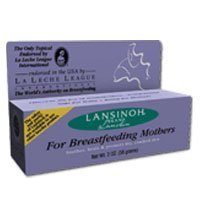
Diaper Rash: You know the “Lansinoh” for breast feeding mothers? Well it’s GREAT on diaper rash. It sets up a waterproof barrier that protects your little one’s bum and helps to heal the chemical burns and chapping from the urine.
Teething: Best thing I ever did was cut small handed stalks of celery about 5 inches worth, place them in a bit of water in a cup in the refrig. When my daughter started the teething whine – I’d grab a stalk and she was satisfied. The celery is fibrous and can be gnawed on without chunking off like a carrot. It’s great with kidos that seem to have a texture issue with the old standby teething rings.
BathTime: I highly recommend the safety first baby bath seat. It swivels and locks. It keeps baby’s face/head up out and away from the water. It also allows a more hands-free bathing opportunity. You can actually use both hands for bathing and playing rather than attempting to hang on to a wiggly slippery 6-month old!
That’s all the wisdom I have for today! Hope these nuggets help!
Communication/Bonding/Behavior: Start Signing NOW! It’s never too late to utilize ASL with children. Even if they have acquired a great amount of spoken words, introducing an additional language is where we are in our world!
Diaper Rash: You know the “Lansinoh” for breast feeding mothers? Well it’s GREAT on diaper rash. It sets up a waterproof barrier that protects your little one’s bum and helps to heal the chemical burns and chapping from the urine.
Teething: Best thing I ever did was cut small handed stalks of celery about 5 inches worth, place them in a bit of water in a cup in the refrig. When my daughter started the teething whine – I’d grab a stalk and she was satisfied. The celery is fibrous and can be gnawed on without chunking off like a carrot. It’s great with kidos that seem to have a texture issue with the old standby teething rings.
BathTime: I highly recommend the safety first baby bath seat. It swivels and locks. It keeps baby’s face/head up out and away from the water. It also allows a more hands-free bathing opportunity. You can actually use both hands for bathing and playing rather than attempting to hang on to a wiggly slippery 6-month old!
That’s all the wisdom I have for today! Hope these nuggets help!
Monday, March 1, 2010
Next Time Won't You "SIGN" WIth Me
I'm not sure how the end of your "abc" song sounds, but my children have grown up singing, "now I know my abcs, next time won't you 'sign' with me."

I have enjoyed teaching my children their ABCs with American Sign Language.
Lately I have been enjoying the doodle board to help my nearly 2 year old daughter learn her ABCs by letter recognition. She’s been singing the ABCs since the age of 18 months with fine tuning occurring each month following. This fine tuning includes her pronunciation becoming clearer and her singing becoming more frequent.^_^ With her interest in letters, it’s a great opportunity to teach letter recognition. And even without the letters in view such as on a doodle board, signing has allowed me to teach the alphabet in a visual engaging way!
And what better way to teach letter recognition than with American Sign Language.
*sing the alphabet when ever you think of it (driving in the car is a favorite time of mine to break out in song/ ask your child to sign a certain letter as you are driving)
*sing the alphabet when ever you think of it (driving in the car is a favorite time of mine to break out in song/ ask your child to sign a certain letter as you are driving)
*and add those signs when ever possible (while feeding your child in his high chair... between those many bites or while reading their favorite ABC book)
*find opportunities to engage your child in learning their abcs (magnetic abcs on the refrigerator or white board, bath tub letters, or even while peering over your keyboard on your computer)

There’s many opportunities to teach ABCs. Take for instance when you’re on the computer and your little one notices the letters on the keyboard or when she sees letters on a cartoon and says “ABCs.” They understand that these symbols which we call letters have names. And what a fun way to help give each letter it’s own significant symbol through signing.
Written by Shawna Tran: www.mybabydetails.com
Is it too early? Is it too late?

"When is the best age to start signing with my child," is the one most common question I am asked by every parent. A quick browse on the Net will result in various answers, no surprise, and the truth is that I do not like to give an exact time frame to any parent. Children are unique in their development, and sign language is no different than rolling over, sitting up, smiling, crawling, and walking. Your baby will sign according to his/her own time frame.
Babies are often ready to sign back when they sit by themselves and can point. Does that mean we should only start signing at that time? Definitely not. We start talking to them well before this point and the same applies to sign language. In fact, babies who are born to families with deaf parents or siblings are exposed to signing at birth. I do not believe in ‘too young’ or ‘too old’ – you are the expert on your child and your instincts will lead the way. Keep in mind, however, that babies are fast learners and may understand what you are signing well before they are able to sign back.
I began the signing process with my daughter when she was 8 months old. Today – 6 years later – signing remains part of her daily life and routine. Her vocabulary is so rich and she is constantly asking to learn more signs and words. (We just learned the signs for ‘imagination’ and ‘pretend’ as she is playing with dolls).
Recently I received an e-mail from Magda, a mom who uses sign language after participating in our class. Her message read:
“I took Etel's class when my son was 5 months. By 6 months, he started signing ’milk’, wow. My son was fascinated by the class, looking at everybody signing at the same time”.
“Put the Power of language into your child’s hands.”™
Let the Sign Shine!
etel
Etel Leit, M.S.
Founder & Owner www.SignShine.com
Publisher www.BabySignShine.com
Monday, February 22, 2010
Even in Utero
Parents make an inpact–even in utero.
We know that, as expectant mothers, we need to be acutely aware of what we eat and drink, what medications we take, how much to exercise, what to avoicd, etc.
It’s also important to remember that our emotions effect our developing baby–and by 20 weeks, the baby can hear our voices. Singing and playing music can make a lasting impression.
My older son was born via unexpected c-section, so my husband was the first to hold him. Behind me, I heard Zeke’s crying suddenly stop as Ian began to sing to him. He clearly recognized his daddy’s voice–Ian had been singing into my belly daily for 41 weeks!
During my 2nd pregnancy, Zeke sang into my belly along with Ian. I had a V-bac and was able to hold Sian right away. He recognized all our voices, and even seemed to favor some of the songs we had sung most often. Both the boys study music now and love to sing.
Not surprisingly, a very early sign they both used was “music.” :)
Read more at www.mybabyfingers.com
Saturday, February 13, 2010
The Good, The Bad, The Ugly... & The Cute!
Join me in my quest to find the most acceptable sign image. I write children's books, curriculum and develop signing materials for the Hands 4 Learning website. Over the past 5 years, I’ve been searching for just the right “look” for static signers. I’ve seen all kinds!
One of the first, literally over 20 years ago, was your standard pencil or line drawings.
It’s clean and easy. Simple enough for an artist (not even a great one) to do rather quickly. I’m no artist – but given enough paper and time… I could produce these, especially after my one-semester Art and Drawing class I took in college.
Next came the “Scary Clip Art” looking adults.
I develop my materials for children, their parents and Educators – kids don’t need fierce scowling grownups looking as if they’re hurling signs (quite possibly gang style) in their direction.
We saw some improvement to the “Line Drawing” style as we moved to a much more artful or even soft cartoon looking child. They did get something write – the kid. But at times I find the fat fingers, short arms and frighteningly large noggins over played. I realize my own infant started her signing process utilizing “Sign Approximation” but do I need to see it on a published level?
Yikes – then we went “SUPERHERO” with the Avatar look. Wouldn’t show this to my 3 year old in a storybook – let alone, see an entire movie of them!
But fear not!!! I think I found what we’ve been looking for! May I present the “The Hands 4 Learning Little Signers”. They are children. They are accurate. They look like my 5 year old’s kindergarten classmates. And these can help Moms and Dads, too.
I’m curious to get your thoughts! What’s your best  search on a “static” sign image?
Tuesday, February 9, 2010
Babies: Prewired to Learn Language
How is it that children as young as three years of age are speaking in full sentences and expressing all their needs with little or no difficulty? Language systems are extremely complex, and yet, infants and toddlers are able to grasp the phonemic combinations and the grammatical rules to be able to communicate with near fluency. Professor Noam Chomsky of MIT in the 1960’s made major discoveries in the area of child language development when he proposed that language ‘was an innate property of the human species’. Infants’ brains are actually prewired for the learning of language. That is not to say that their brains are prewired with language, rather their brains are prewired for the LEARNING of language. Babies are influenced by the language that they are exposed to; their ability to learn the languages that they are exposed to, is made possible by their predisposition to decipher the complexities of language.
If a baby were placed in a room with no interactions, that baby would not come out speaking a language. On the contrary, babies who are deprived of human interaction, show significant delay in their language acquisition and in fact such deprivation has a negative impact on their brain development. In other words, the first three years of a baby’s life are critical in establishing neural pathways necessary for language and brain development, as demonstrated in the 1997 National Institute of Child Health and Human Development Study of Early Child Care.
Numerous studies have shown that the effects of language stimulation and the growth of brain pathways are critical in the first three years of life. Placing a child in front of a television or a computer does not promote language development the way verbally interacting with the child enhances brain development. Likewise, an environment that exposes the child to sign language - spatial verbalizations and a language system with linguistic structure - as demonstrated in Susan Goodwyn, Ph.D. and Linda Acredolo, Ph.D.’s study found when examining children, ages 3, 4 and 8 that children who learned sign language out performed children who had not been exposed to sign language on every cognitive, linguistic and intellectual level
Subscribe to:
Posts (Atom)