
The foundation of good communication:
Eye contact is a subtle, but very critical aspect of communication. If a person has good eye contact, the chances of him developing communication skills is much improved. When you give your baby good eye contact, you are not only connecting with him in a beautiful way, but you then are a role model for him as well. We want our babies to understand the notion that one can communicate a lot through one’s eyes and through one’s facial expressions.
By encouraging your baby to give good eye contact, you are establishing the foundation for sign language as well as effective auditory communication. It is very difficult to learn sign language without eye contact. This is one of the primary beauties of this particular mode of communication. With an auditory language such as our spoken English, many people now try and communicate while looking at their phones, or their ipads, or televisions. When you do not make eye contact, and keep your eyes looking at the task at hand, you allow your face to remain expressionless. Then when you do look up and try to communicate with the same expressionless face, you lose the ability to connect with the other person. Effective communicators are good at giving eye contact, good at using their bodies, hands and facial expressions, and are good at receiving information from others through the eyes, hands, faces and bodies of others. You develop speech without the use of your eyes, but it is much more difficult to develop sign language without the use of your eyes. Sign language naturally helps babies become effective communicators.


CLASSES AND PROGRAMS
PRODUCTS
DVDs
CDs
Books
Flash cards
Board books
Toys
Others
Share products
FUN
Pictures
Videos
Share your pic
and video

Signing With Babies And Children: Communication
Showing posts with label Communication. Show all posts
Showing posts with label Communication. Show all posts
Tuesday, January 25, 2011


Sunday, July 25, 2010
Sign Language Helps Children to be Effective Communicators
In this day and age when so many of our children are overexposed to television, video games, computers and cell phones, children run the risk of never developing the ability to be effective communicators. Sign language encourages children to make eye contact, to be aware of subtle facial expressions, and bodily gestures and to be better listeners - all important elements to effective and successful communication. By teaching your children sign language, you are giving them the gift of effective communication while at the same time having tons of fun.
The benefits of signing are endless. Sign language can enhance the bond between parent and child, and promote early communication. By teaching your baby sign language you are empowering your child with a means with which to communicate his thoughts. A baby’s brain is ready for language much earlier than the vocal chords are ready to speak. In other words, a baby understands and can communicate his needs and desires if you provide him with a mode of communication that is not reliant on vocal chords. Sign language empowers babies to express their feelings and needs, therefore reducing frustration and promoting comprehension, which leads to a much happier and respectful relationship between parent and child.
Wednesday, March 10, 2010
A Few Mom Tips
Mommy Tips are what I’m going to list…
Communication/Bonding/Behavior: Start Signing NOW! It’s never too late to utilize ASL with children. Even if they have acquired a great amount of spoken words, introducing an additional language is where we are in our world!
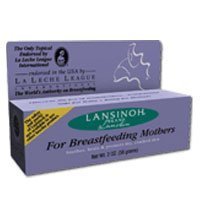
Diaper Rash: You know the “Lansinoh” for breast feeding mothers? Well it’s GREAT on diaper rash. It sets up a waterproof barrier that protects your little one’s bum and helps to heal the chemical burns and chapping from the urine.
Teething: Best thing I ever did was cut small handed stalks of celery about 5 inches worth, place them in a bit of water in a cup in the refrig. When my daughter started the teething whine – I’d grab a stalk and she was satisfied. The celery is fibrous and can be gnawed on without chunking off like a carrot. It’s great with kidos that seem to have a texture issue with the old standby teething rings.
BathTime: I highly recommend the safety first baby bath seat. It swivels and locks. It keeps baby’s face/head up out and away from the water. It also allows a more hands-free bathing opportunity. You can actually use both hands for bathing and playing rather than attempting to hang on to a wiggly slippery 6-month old!
That’s all the wisdom I have for today! Hope these nuggets help!
Communication/Bonding/Behavior: Start Signing NOW! It’s never too late to utilize ASL with children. Even if they have acquired a great amount of spoken words, introducing an additional language is where we are in our world!
Diaper Rash: You know the “Lansinoh” for breast feeding mothers? Well it’s GREAT on diaper rash. It sets up a waterproof barrier that protects your little one’s bum and helps to heal the chemical burns and chapping from the urine.
Teething: Best thing I ever did was cut small handed stalks of celery about 5 inches worth, place them in a bit of water in a cup in the refrig. When my daughter started the teething whine – I’d grab a stalk and she was satisfied. The celery is fibrous and can be gnawed on without chunking off like a carrot. It’s great with kidos that seem to have a texture issue with the old standby teething rings.
BathTime: I highly recommend the safety first baby bath seat. It swivels and locks. It keeps baby’s face/head up out and away from the water. It also allows a more hands-free bathing opportunity. You can actually use both hands for bathing and playing rather than attempting to hang on to a wiggly slippery 6-month old!
That’s all the wisdom I have for today! Hope these nuggets help!
Tuesday, December 15, 2009
The Debate Continues...
There has been lots of research on the effect of using augmentative or alternative communication methods (like signing) on the spoken language development of children. However, I've never seen any that suggest that using sign or other methods delays speech -- in fact, just the opposite. Learning to communicate in any form, develops the language areas of the brain, so that when the motor systems are ready for verbal speech, words and meanings have already been established. All that's left to do - is to associate sounds with them. Kids having a head start in using sign have an advantage when they do begin talking.
There has never been a case in all the literature, of a child who preferred to use sign (or any other non-speech system) after developing normal speech. Remember - communication is inherent! It's on our DNA. We want to communicate. Using ASL with children of any age only assists and advances this process for all involved!
Kelly English Barnhart, MA www.hands4learning.com
Author: "Crossing Hands Friends" www.hands4learning.com
kelly@hands4learning.com
There has never been a case in all the literature, of a child who preferred to use sign (or any other non-speech system) after developing normal speech. Remember - communication is inherent! It's on our DNA. We want to communicate. Using ASL with children of any age only assists and advances this process for all involved!
Kelly English Barnhart, MA www.hands4learning.com
Author: "Crossing Hands Friends" www.hands4learning.com
kelly@hands4learning.com
Monday, November 2, 2009
Communication! Whew!!
I was on the subway the other day when I saw a former client of mine, someone who had taken Baby Fingers classes for quite some time, when her baby was 3 - 15 months old. He is jsut over 2 yrs old now.
He was crying so hard, he could hardly breathe, let alone talk to his mom, and she couldn't figure out if he was scared, hurt, or something else. Suddenly she reminded him to sign to her and he did! He signed "Friend-Stop!"
We departed the train at the same time, so I was able to say hello and marvel at their conversation. She further explained to me that they had passed the subway stop where her son's best play group friend lives and he desparately wanted to go play!!
Fortunately, he wasn't hurt, but to our babies and toddlers, when things don't go their way- and especially if they can't communicate that to you- it certainly feels like an emergency. I can still remember the relief I felt when my children were signing before they were talking-- and once they were talking, the sign still helped to clarify their speech or gave them an outlet when the speech just couldn't.
Communication! Whew!!
www.mybabyfingers.com
Sunday, February 22, 2009
Survey Findings Tibit...
Our results from the "Connecting Through Sign: Promoting Communication in Preverbal Children" are amazing! Thanks to all of those who contributed by taking the survey. You still have the opportunity if you haven't had the chance!
Of all the questions that were asked and answered by the participants - the one that does it for me was that 100% of all who answered stated that signing with their child is a positive experience! I think that's incredible!
When the results are completely finalized I will post them here for you to take a look at!
Again - thank you to all who have participated.
Of all the questions that were asked and answered by the participants - the one that does it for me was that 100% of all who answered stated that signing with their child is a positive experience! I think that's incredible!
When the results are completely finalized I will post them here for you to take a look at!
Again - thank you to all who have participated.
Saturday, February 7, 2009
Opportunity to Contribute in Research
This entry encourages you to participate in a quick 30 question survey assisting with primary data collection for the research project: Connecting Through Sign: Promoting Communication in Preverbal Children.
The information gathered in this process is anonymous. No names are collected. Our only bit of information needed for consent in using the information provided by you, is your email. This will NOT be used for ANY other purpose - EVER! After completing the quick survey, you will receive and email consent form for your records.
This is a great opportunity to help us continue the wonderful work we are all benefiting from - especially our children!
Thank you in advance for you participation. Keep checking back to our blog - once the results are tallied we'll post a summary here!
The information gathered in this process is anonymous. No names are collected. Our only bit of information needed for consent in using the information provided by you, is your email. This will NOT be used for ANY other purpose - EVER! After completing the quick survey, you will receive and email consent form for your records.
This is a great opportunity to help us continue the wonderful work we are all benefiting from - especially our children!
Thank you in advance for you participation. Keep checking back to our blog - once the results are tallied we'll post a summary here!
Friday, November 7, 2008
Effective Communication for Growing Minds
Communication is an inherent need of all humans. It’s part of our DNA. Unlike reading a book or riding a bike – we are born communicating. Facial expressions, body movement, vocalizing and even grunting and crying are all forms of communication. An individual that is anti-social is still communicating through their resistance to human interaction.
For those of us that have been involved in a “serious” relationship at some point in our lives, we’ve more than likely experienced the communication technique referred to as “the grunt”. Though it is primitive and not overly effective in its usefulness, we seem to accept it as a form of communication as demonstrated in the following scenario: Male arrives to the dwelling place prior to female’s arrival. Upon entry, female asks, “How was your day, Honey?” of the male strategically positioned in front of the television in the den, remote in hand clicking feverishly. Male responds with “uughh”. Female accepts this guttural noise as “Fine and yours?” then proceeds to explain the significant happenings of that days’ journey in her life.
Typically developing Infants and Toddlers have an amazing capacity for learning. We know from scientific research studies that we develop our motor skills months before we have the ability to speak words, especially words in their proper context. Furthermore, infants are visual learners to begin with. Then the sense of touch takes over and lastly the auditory portion of learning will kick in. It’s strange that our educational system is largely built on “lecture”, when we are from birth, naturally visual/kinesthetic people.
Understanding some simple mechanics of the brain with regard to the language areas will help to paint a more complete picture of language acquisition. Our brains hold and store language information mainly on the left side, also called the “left hemisphere”. At different positions within the left hemisphere are significant areas or buckets (as I like to think of them visually), where the physical support (tongue and lip movement), auditory support (comprehension and understanding) and production support (actual speech producing area) are held. Each spoken language that is acquired has its own bucket. These buckets again are stored on the left side of our brains. Language acquisition begins as early as 5 to 6 months of age in typically developing infants. The brain categorizes sounds and noises in its most basic process of acquiring language. This is called “phonology”. Creativity, memory and movement are held on the right side or hemisphere of our brains.
Teaching an infant or child American Sign Language creates buckets in both hemispheres as American Sign Language is a language with syntax and linear processing. However because of its gestures (signs) it is a “movement language” - right side of the brain stuff!
Additionally, “Midline: crossing is key in language development.” The reason is because when you cross your arms over the “midline” of your body (the Adams apple to the belly button) the right and left lobes of your brain beef up their communication with each other and form super highways known as the synapses.
So for a child to grasp language and expand vocabulary, American Sign Language creates more resources in the brain for the brain to find things—like letters and their sounds. This develops what the Education World calls “Reading Readiness”. It actually does this at a faster rate than typically developing children with no American Sign Language background.
Using American Sign Language with infants and toddlers is proven to be an extremely effective form of two-way communication. It helps to reduce frustration for both the baby AND the parent. This, in itself, is a wonderful gift—having calm parents and a clam baby. It’s useful in continuing the bond with mother to baby, and is helpful to create father to baby and baby to parent bonding.
Shortened version here. For full length visit http://valleyhealthmag.com/archives/June08low.pdf
Written by: Kelly Barnhart, Learning Style & Communication Specialist and Children's book author (www.hands4learning.com & www.sign2connect.com)
Subscribe to:
Posts (Atom)